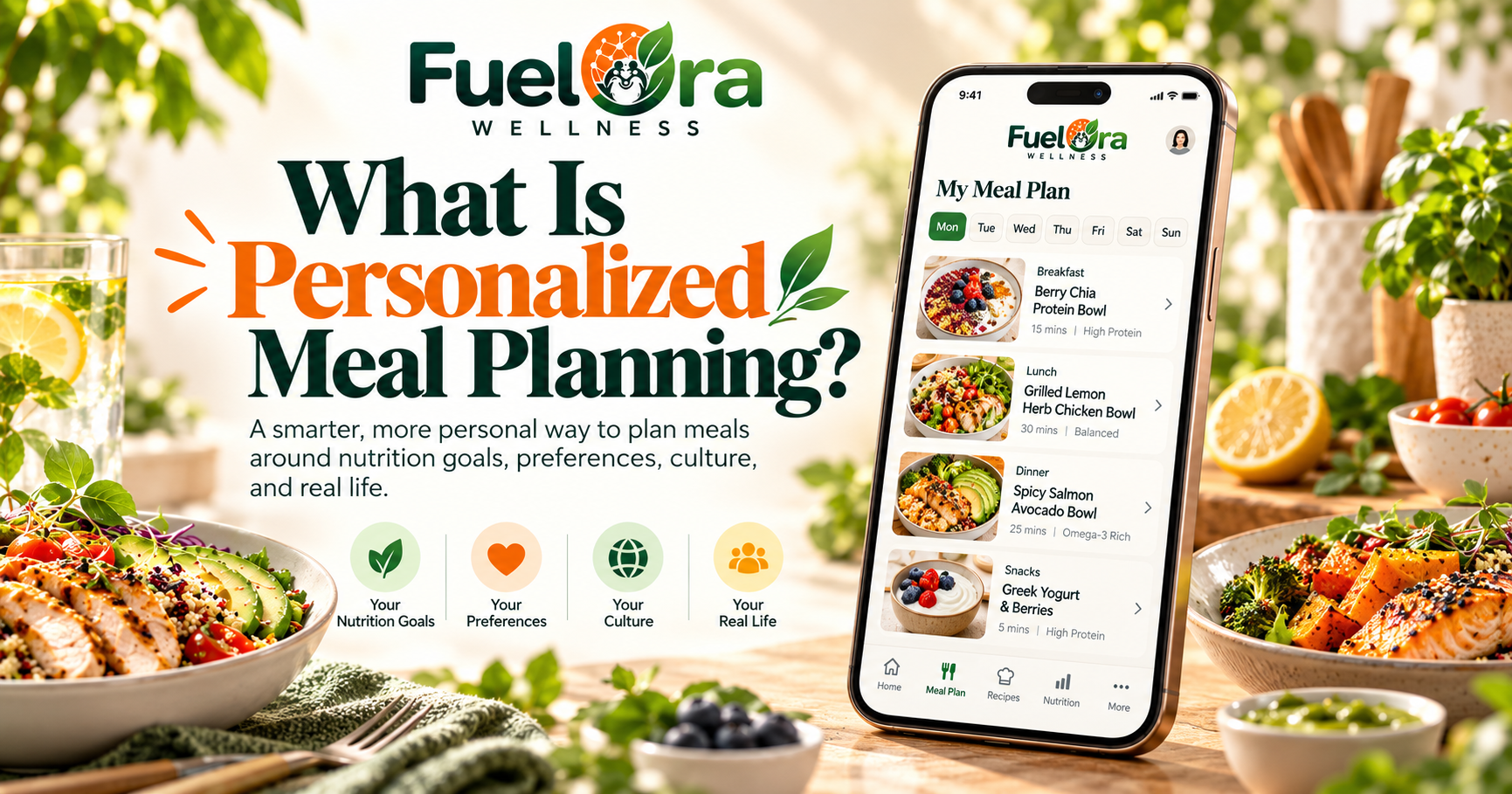
Personalized meal planning is more than choosing a calorie target or generating a list of healthy recipes. A useful meal plan has to fit the person who is actually going to follow it.
That means considering food preferences, dietary needs, culture, cooking time, available equipment, household routines, previous meals, grocery needs, pantry context and the reality that plans sometimes change.
A meal plan can look perfect on paper and still be difficult to follow in real life. The difference is often not information. It is context.
Personalized meal planning goes beyond calories and macros
Calories, protein, carbohydrates and fats can all be important parts of nutrition planning. But numbers alone do not make a meal plan personal.
Imagine receiving a nutritionally balanced dinner recommendation that takes forty minutes to prepare when you only have ten minutes. Or a recipe that requires an oven when you do not have one. Or a meal built around foods you dislike, rarely eat or cannot safely include in your diet.
The nutrition calculation may still be correct, but the recommendation is not very useful.
Personalized meal planning should connect nutrition goals with the practical details that determine whether a meal actually makes sense for someone.
What should a personalized meal plan consider?
There is no single factor that makes a meal plan personalized. Good personalization comes from combining several pieces of context.
Food preferences
People are more likely to follow a plan when the meals include foods they genuinely enjoy.
Personalization should account for likes, dislikes and familiar ingredients rather than repeatedly recommending meals that technically fit a target but do not fit the person.
Dietary needs
Meal planning should respect dietary restrictions, allergies and other food-related requirements.
A recommendation is not useful if someone cannot safely eat it. These constraints should be treated as part of the foundation of planning, not as an afterthought.
Culture and cuisine
Food is not simply a collection of nutrients. It is also connected to culture, family, familiarity and enjoyment.
Personalized wellness should not require someone to abandon the foods that are already part of their life.
A useful meal-planning system should be able to work within different cuisines and food traditions while still supporting broader nutrition goals.
Cooking time
Available time can completely change what makes sense for a meal.
Some days may allow thirty or forty minutes for cooking. Other days may allow ten.
A personalized plan should consider those differences rather than assume every day has the same schedule.
Available equipment
A recipe should also match the equipment someone actually has.
A recommendation that depends on a blender, air fryer, oven or another appliance is not practical if that equipment is unavailable.
Good planning should reduce friction, not create another obstacle between the plan and the meal.
Household needs
Many people are not planning food for themselves alone.
Household size, shared meals and different preferences can all influence what should be prepared and how much is needed.
Meal planning becomes more useful when it reflects how people actually eat at home.
Previous meals and variety
Personalization should also consider what someone has already eaten.
Repeating the same meals too frequently may make a plan technically valid but difficult to enjoy over time.
Looking at recent meals can help create more variety while still respecting preferences.
Pantry and grocery context
Meal planning does not stop when a recipe is selected.
Someone still needs the ingredients, and many households already have food sitting in the refrigerator, freezer or pantry.
Connecting planning with grocery and pantry context can make the overall experience more practical and can help reduce unnecessary purchases and food waste.
Why generic meal plans are difficult to follow
Most people do not struggle because they have never heard that vegetables are nutritious or that cooking at home can support better everyday choices.
The harder problem is execution.
What should I eat today?
Do I have the ingredients?
How long will it take?
Can I make it with the equipment I have?
Does it fit my preferences and dietary needs?
What happens if my schedule changes?
These questions are connected. A generic plan often answers only one of them.
That is why a plan can be nutritionally sound and still fail in practice.
Culture matters in meal planning
Healthy eating should work within culture, not against it.
Someone who regularly eats Indian, Mexican, Japanese, Korean, Mediterranean, Thai or American food should not have to move toward an unfamiliar style of eating just because they want more structure around wellness.
The better approach is to understand the foods someone already enjoys and help make those choices work within their broader goals.
That makes the plan more familiar, more enjoyable and often easier to sustain.
Meal planning should connect to groceries and cooking
A meal plan is only one layer of the experience.
A plan connects to recipes.
Recipes connect to ingredients.
Ingredients connect to groceries and Pantry.
And once the ingredients are available, someone still has to cook the meal.
When these experiences are treated separately, people are left to coordinate everything themselves.
A more connected approach can reduce some of that friction by allowing each part of the system to understand the parts around it.
What happens when the plan changes?
Real life rarely follows a perfect schedule.
Meetings run late. Ingredients run out. Plans change. Someone may eat away from home or simply decide they want something different.
A useful meal-planning system should be able to adapt rather than treat every change as a failure.
The goal should not be perfect adherence to a rigid plan.
The goal should be helping people make practical choices consistently over time.
How FuelOra approaches personalized meal planning
FuelOra was built around the idea that wellness decisions work better when they understand the context around the person making them.
Meal planning is one part of that experience.
FuelOra considers factors such as food preferences, dietary needs, cuisine and culture, cooking time, available equipment, previous meals and other relevant context when building plans.
The goal is not simply to generate more recommendations. It is to make those recommendations more usable in real life.
FuelOra also connects meal planning with recipes, cooking, groceries and everyday wellness so those experiences do not have to exist as isolated tools.
You can read more about the thinking behind the platform in FuelOra Is Live: Why We Built a Different Kind of Wellness Platform.
The goal is consistency, not perfection
A perfect meal plan that someone cannot follow is not very useful.
Personalized meal planning should help reduce everyday friction and make healthier choices easier to repeat.
That means working with real schedules, real preferences, real households and real food.
Because sustainable wellness is less about following the perfect plan every day and more about having a system that can continue to support you when real life changes.
That is the kind of personalized meal planning we are building toward at FuelOra Wellness.